
Custom vs Rental Trade Show Booths for Exhibitors
Table of Contents
The Real Decision Behind Custom vs Rental Trade Show Booths
How to Use This Comparison
Cost Analysis: Upfront Investment vs Long-Term Expenses
Understanding Total Cost of Ownership (TCO)
Build a Three-Year TCO Model in Five Steps
The Hidden Costs of Renting
The Hidden Costs of Owning
Where the Crossover Actually Sits
Flexibility and Scalability: Which Booth Configuration Fits Your Show Schedule?
Trade Show Booth Logistics and Drayage: What Changes Between Custom and Rental
What Actually Drives Drayage Cost
Storage, Insurance, and Refurbishment: The Owned-Asset Logistics Nobody Quotes
Hybrid Logistics: Own the Core, Rent the Rest
Design Decisions That Cut Logistics Cost for Life
Custom Exhibit Fabrication Timeline: What to Expect From Concept to Show Floor
Typical Phases of a Custom Build
Reusable Trade Show Exhibit Strategy: Building for Multiple Shows
Managing Installation and Dismantle Labor: Cost Drivers and Control
Decision Matrix for Marketing Managers
Frequently Asked Questions
Last Updated: September 19, 2026
The Real Decision Behind Custom vs Rental Trade Show Booths
The custom vs rental trade show booths decision rarely comes down to looks. It comes down to how often you exhibit, how much brand control you need, and whether you can absorb a capital expense.
How to Use This Comparison
Start with cost structure, then work through flexibility, logistics, and timeline. Exhibiting three or more shows a year with a consistent brand message? Read the custom sections closely. Unpredictable schedule or testing new markets? The rental sections matter more.
Factor | Rental Booth | Custom Booth |
Cost type | Operating expense (OpEx) | Capital expenditure (CapEx) |
Upfront commitment | Low | High |
Brand control | Limited to graphic panels | Complete |
Storage required | None | Yes |
Best for | 1-2 shows per year | 3+ shows per year |
Cost Analysis: Upfront Investment vs Long-Term Expenses
Rental booths win on upfront cost. Custom booths win on cost per show once you exhibit frequently enough. The crossover point depends on your show schedule, not the booth.
Understanding Total Cost of Ownership (TCO)
Total cost of ownership (TCO) is the sum of every cost an exhibit generates over its usable life, including design, fabrication, graphics, freight, drayage, installation labor, storage, insurance, and refurbishment.
For a custom booth, TCO typically includes:
Design and engineering
Fabrication and finishing
Graphic production and reprints
Crating and freight to each show
Drayage and material handling
Setup and dismantle (S&D) labor
Storage fees between shows
Insurance and depreciation
Refurbishment every few years
Build a Three-Year TCO Model in Five Steps
Step 1, List your shows for the next 36 months. Include booked shows and ones you're 70% likely to attend. Mark each as anchor (consistent message, big footprint) or one-off (new market, test, regional).
Pro Tip Run the model twice: once with your current schedule and once with a schedule that's 50% larger. If custom only wins in the larger scenario, you're not deciding between rental and custom, you're deciding whether to bet on growth. Build modular so you can hedge.
The Hidden Costs of Renting
Rental fees repeat. That's the point and the problem.
Exhibit at four shows a year and you pay the rental fee four times, plus graphics four times if messaging changes. Over several years those fees can exceed what a custom asset would have cost, and you still own nothing.
The Hidden Costs of Owning
Custom isn't free after the build. The costs that surprise first-time owners arrive between shows.
Storage. A crated island exhibit takes real warehouse space. Climate control matters with wood veneer, fabric, or electronics.
Insurance. Your asset needs coverage in storage and transit, separate from general liability.
Refurbishment. Graphics fade, laminate scratches, hardware wears. Budget for a refresh cycle.
Inspection and inventory. Missing hardware and damaged crates show up on the show floor if nobody checks between shows.
Obsolescence. If your brand refreshes every 18 months, a custom asset built for a five-year life may be retired early.
Where the Crossover Actually Sits
Key Takeaway The invoice is not the cost. The cost is the invoice plus everything that follows the asset for three years. Build the model, then decide.
If you have a show schedule and a rough budget but no model yet, that's a conversation worth having before you commit to either path.
Flexibility and Scalability: Which Booth Configuration Fits Your Show Schedule?
Rental wins when your schedule is unpredictable. Custom wins when your booth configuration needs to stay consistent across many shows.
Key Takeaway The question isn't "custom or rental." It's "how much will my show schedule change in the next three years?" If the answer is "a lot," prioritize modularity in either path.
Trade Show Booth Logistics and Drayage: What Changes Between Custom and Rental
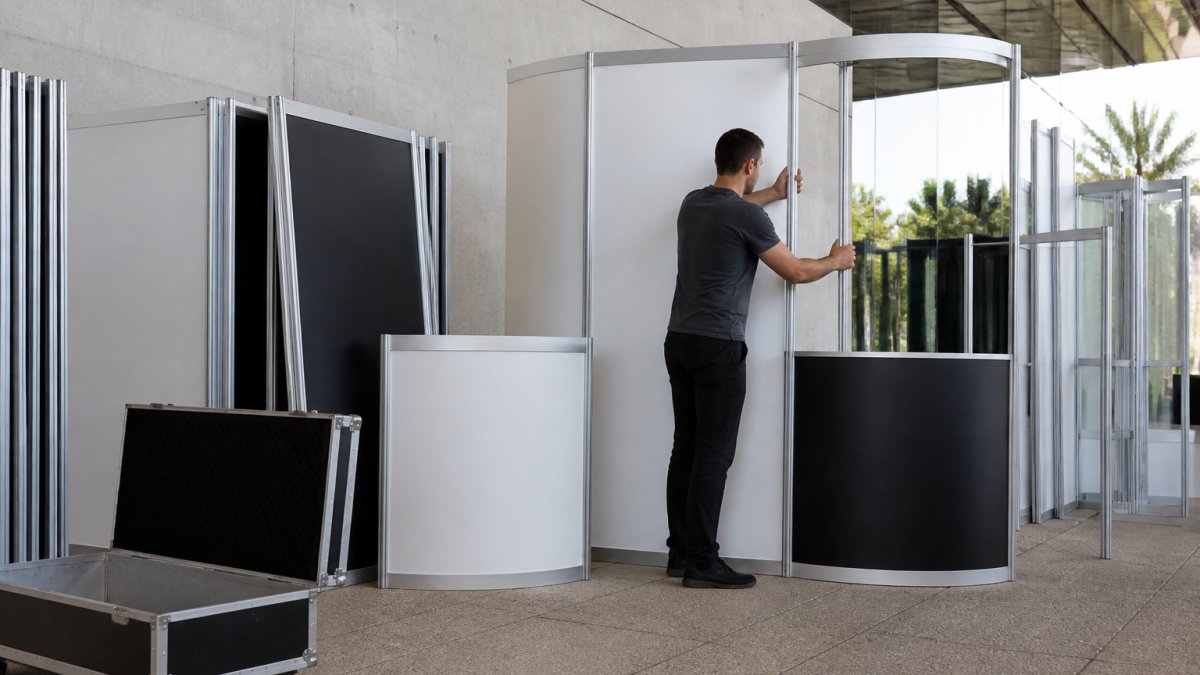
Logistics and drayage costs diverge sharply. Rental booths typically ship in standardized crates with predictable weights. Custom booths often ship heavier, in more crates, with higher handling charges.

What Actually Drives Drayage Cost
Drayage is not one number. It's a stack of charges, each tied to a design decision.
Weight. Material handling is billed by the hundredweight. Solid millwork, stone counters, glass, and steel substructures add weight fast; a rental kit of aluminum extrusion and tension fabric weighs a fraction as much.
Crate count. Every crate is a separate handling unit. Four crates cost more to move than the same booth nested into two.
Dimensional weight. Oversized crates that don't cube out efficiently get billed above their actual weight.
Special handling. Crates needing a forklift, crane, or two-person lift carry surcharges, as do crates without proper labeling.
Storage at the venue. Freight arriving before the move-in window gets stored by the venue or general contractor, and billed for it.
Storage, Insurance, and Refurbishment: The Owned-Asset Logistics Nobody Quotes
Rental logistics end when the show ends. Owned-asset logistics run year-round.
Hybrid Logistics: Own the Core, Rent the Rest
This is the middle ground most comparison articles skip, and where a lot of experienced exhibitors land.
Why it works:
You stop paying to ship and store things you don't reuse. Rental graphics don't come home with you.
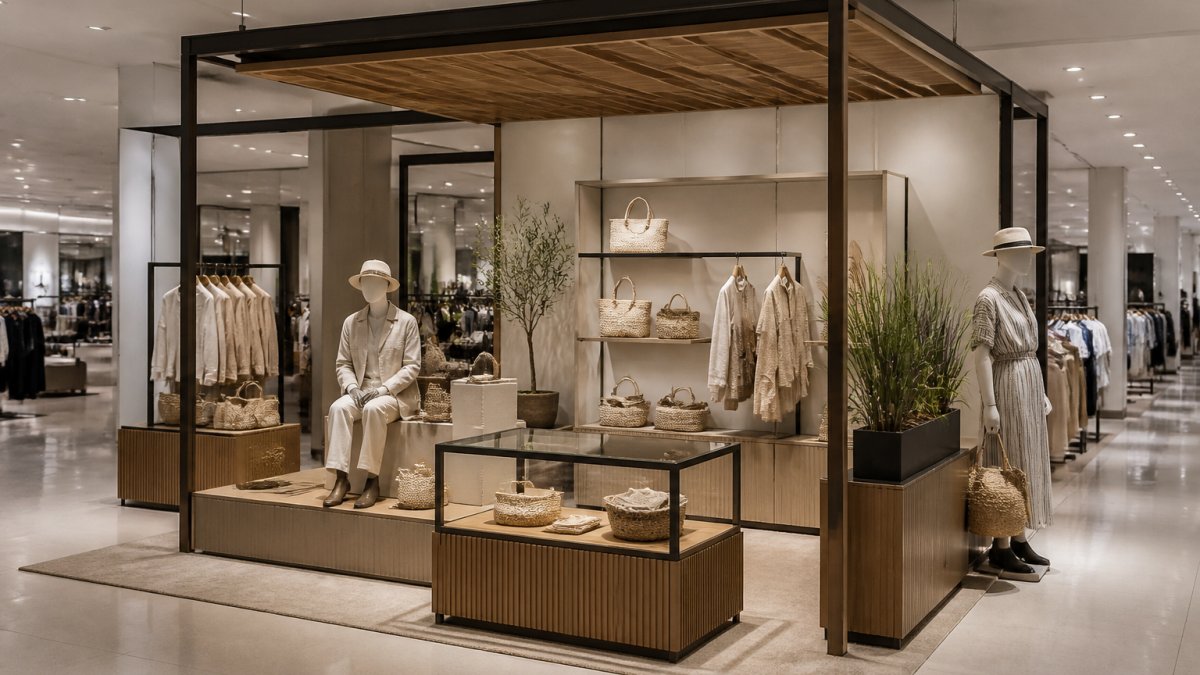
You keep brand control where it matters. The structure carries the brand; the graphics carry the message.
You scale without rebuilding. Add a rented lounge for a big show, drop it for a regional one.
You cut drayage on the changing parts. Rental components often ship from a regional depot closer to the venue than your warehouse.
Design Decisions That Cut Logistics Cost for Life
Design for nesting and stacking. Components that cube out efficiently ship in fewer crates.
Standardize hardware. One tool, one fastener type, one connection system cuts install time and lost-part risk.
Label everything. Every crate, panel, and cable. Unlabeled freight is slow freight.
Build in a pre-show assembly. A shop assembly catches fit issues before the loading dock does.
Plan for the venue, not just the booth. Ceiling height, rigging rules, union labor requirements, and dock access vary by venue.
Watch Out The most expensive logistics mistake is designing a booth that only works in one venue. If your program includes shows in older convention centers with low ceilings or tight docks, engineer for the worst case, not the best.
If you're planning a multi-show program and want the logistics modeled before you commit to a build, that's exactly the kind of conversation to have early. Already have a rendering? Send it over and we'll tell you what it costs to move.
Custom Exhibit Fabrication Timeline: What to Expect From Concept to Show Floor
A custom exhibit fabrication timeline typically runs 10 to 16 weeks from approved design to show floor, depending on complexity, materials, and finishing. Compressed timelines are possible but reduce the margin for revisions.
Typical Phases of a Custom Build
Discovery and concept: 1-2 weeks
Design and 3D visualization: 2-3 weeks
Engineering and shop drawings: 2-3 weeks
Fabrication: 4-8 weeks
Finishing, graphics, and lighting: 1-2 weeks
Pre-show assembly and QC: 3-5 days
Shipping and installation: 1-2 weeks
Rental timelines are shorter because the hardware already exists. The trade-off is that your design is constrained by available inventory.
Watch Out The most common timeline mistake is approving a design late and then asking the fabricator to compress fabrication. That's how booths arrive with unfinished edges or missing graphics. If your show date is fixed, lock the design early.
Reusable Trade Show Exhibit Strategy: Building for Multiple Shows
A reusable trade show exhibit strategy treats the booth as an asset with a lifecycle, not a one-time purchase. The goal is multiple shows out of one build with minimal rework.
Managing Installation and Dismantle Labor: Cost Drivers and Control
Installation labor is one of the largest controllable costs in an exhibit program. The drivers are booth complexity, crate count, union labor rules, and how well the booth was engineered for assembly.
Ways to control S&D costs:
Design for fewer tools and faster connections
Reduce crate count through nesting
Label every component for unambiguous placement
Ship with a clear installation drawing
Pre-assemble in the shop to catch fit issues before the show floor
Decision Matrix for Marketing Managers
Use this matrix to choose a direction. Score each row honestly, then count the answers.
Your Situation | Recommended Path |
1-2 shows per year | Rental |
3+ shows per year, consistent brand | Custom |
Unpredictable show schedule | Rental or custom-modular |
Need a unique branded environment | Custom |
Testing a new market | Rental |
Multi-city program with varying footprints | Custom-modular |
Limited storage available | Rental |
Strong need for brand consistency | Custom |
Frequently Asked Questions
How much does a custom trade show booth cost compared to renting?
Pricing depends on booth size, materials, complexity, and whether you need AV, lighting, or custom millwork. Rental rates are typically quoted per show, while custom fabrication is a project-based capital investment. Neither path has a single standard price. The right comparison is total cost of ownership across your full show schedule, not the sticker price of one event. Request a quote with your booth footprint and show dates to get accurate numbers.
When does it make financial sense to transition from a rental to a custom exhibit?
The tipping point usually comes down to event frequency, booth footprint consistency, and brand control needs. If you exhibit at four or more shows per year with a similar booth size, the cumulative rental fees and repeated graphic production can exceed the cost of owning a reusable trade show exhibit. Exhibitors who need proprietary structural elements, integrated AV, or a distinctive brand identity also tend to outgrow rental catalogs faster.
How does booth selection impact drayage and installation labor costs?
Heavier custom structures often require more crates, more material handling, and longer setup and dismantle (S&D) windows, all of which increase drayage and labor. Modular rental systems are designed to ship in fewer cases with faster assembly. A custom-modular approach can reduce both by engineering components that fit standard crate sizes and assemble with fewer crew members. Design decisions made early have the biggest effect on these recurring costs.
What should I know about managing installation and dismantle labor for a custom booth?
Custom exhibits typically need a trained installation and dismantle crew familiar with the structure, especially for rigging, lighting, and AV components. Union labor rules vary by venue, and some facilities require specific certifications. Budget for S&D labor as a recurring line item, not a one-time cost. Providing detailed installation drawings, labeled crates, and a clear order of assembly reduces on-site hours and the risk of damage during setup.
LET'S START SOMETHING AMAZING

Comments