
Trade Show Exhibit Design: The 2026 Ultimate Guide
Table of Contents
Why Trade Show Exhibit Design Decides Your Show ROI
The Real Cost of a Booth Nobody Walks Into
How to Design Modular Trade Show Exhibits for Reuse
Modular vs. Portable Display Systems: What Actually Survives a Season
Trade Show Booth Design and Build: From Floor Plan to Freight
Venue Rules and the Show Kit: What to Confirm First
Lead Times: How Far Ahead to Start
Fabrication Mechanics: How the Booth Actually Gets Built
Traffic Flow Psychology and Floor Space Optimization
Lighting, Graphics, and Visual Impact That Reads From the Aisle
When a Custom Trade Show Booth Beats a Rental
The Break-Even Math on Build vs. Rent
Footprint Math: 10x10, 10x20, 20x20, and Island
What Actually Drives Custom Booth Cost
Interactive Kiosks, Engagement Tactics, and Lead Capture
How to Choose a Trade Show Exhibit Company
Installation and Dismantle: Cutting Drayage and Labor Costs by Design
Post-Show Lead Conversion: Where Exhibit ROI Actually Gets Made
Frequently Asked Questions
Last Updated: September 17, 2026
Why Trade Show Exhibit Design Decides Your Show ROI
Trade show exhibit design is the process of planning, engineering, and building a booth that attracts attendees, starts conversations, and converts them into qualified pipeline. Get it right and the booth pays for itself. Get it wrong and you've rented expensive carpet.
The Real Cost of a Booth Nobody Walks Into
A booth that fails to draw traffic wastes more than the show fee, it wastes airfare, hotel, staff time, freight, and drayage. Every quiet hour is payroll spent on nothing.
Watch Out Designing the booth before you've mapped the show floor plan, freight access, and rigging rules is the single most expensive mistake in exhibit work. Redesigning after fabrication starts can force a full rebuild.
How to Design Modular Trade Show Exhibits for Reuse
The best modular trade show exhibits are engineered around a fixed set of structural components that reconfigure across multiple footprints and shows. Reuse is the difference between a one-time expense and a depreciating asset. Standardize panel sizes, connection hardware, and graphic dimensions so the same kit can stretch from a 10x20 inline to a 20x30 island without new fabrication.
Modular vs. Portable Display Systems: What Actually Survives a Season
System | Structural Durability | Reconfiguration | Best For |
Custom modular (aluminum frame, tension fabric) | High, survives many shows | High, many footprints | Multi-show programs |
Portable pop-up displays | Moderate, careful handling | Low, fixed footprint | Small inlines, one or two shows |
Hybrid (modular frame, portable graphics) | High frame, replaceable graphics | Moderate | Growing programs |
Portable systems are fine for a single show or small inline, but they aren't built to be broken down, crated, and rebuilt repeatedly without wear. Custom modular construction uses aluminum extrusion frames and tension fabric graphics that hold their shape and can be re-skinned as your brand evolves. The cost isn't in the frame, it's in the graphics.
Trade Show Booth Design and Build: From Floor Plan to Freight
Good trade show booth design and build starts with the floor plan, not the rendering. Before a panel is cut, confirm booth footprint, aisle orientation, rigging points, ceiling height, and freight door dimensions.

Here's the sequence that prevents expensive surprises:
Confirm booth footprint and venue rules
Map traffic flow and sight lines from the aisle
Design the structure around shipping and assembly
Engineer the graphics and lighting into the frame
Fabricate, crate, and document the install
Venue Rules and the Show Kit: What to Confirm First
Every venue publishes an exhibitor kit, sometimes called a show kit or service manual, that governs what you can build. Read it before design starts. The rules that most often force redesigns:
Rigging. Not every hall allows overhead rigging, and those that do require certified riggers and specific attachment points. A hanging sign or suspended lighting plan depends on this.
Height limits. Inline booths are typically capped lower than island booths, so a design that clears one hall may not clear another.
Fire and egress. Aisles, exits, and fire lanes can't be blocked, and fabric often needs to meet flame-spread standards.
Utilities. Electrical, water, and compressed air are ordered through the venue or its general contractor. Where they land on the floor plan determines where your power-hungry elements go.
Freight and drayage. The venue sets move-in and move-out windows, dock access, and material handling rules. Design crates and cases around those constraints.
Lead Times: How Far Ahead to Start
Fabrication doesn't happen overnight, and neither does design. A realistic timeline for a custom booth:
Design and engineering: several weeks, longer if the concept is still evolving or requires multiple revision rounds.
Fabrication: several weeks depending on complexity, materials, and shop capacity. Millwork, metal, and finishing take longer than frame-and-fabric builds.
Graphics production: runs in parallel with fabrication but needs final artwork locked early. Late art delays the whole build.
Shipping and install: freight transit, dock scheduling, and install labor all have their own lead times.
Fabrication Mechanics: How the Booth Actually Gets Built
A custom booth is built in a shop, not on the show floor. Understanding the build process helps you make better design decisions.
CNC cutting. Panels, plinths, and structural parts are cut on CNC routers for repeatable accuracy, this is what makes a second booth match the first.
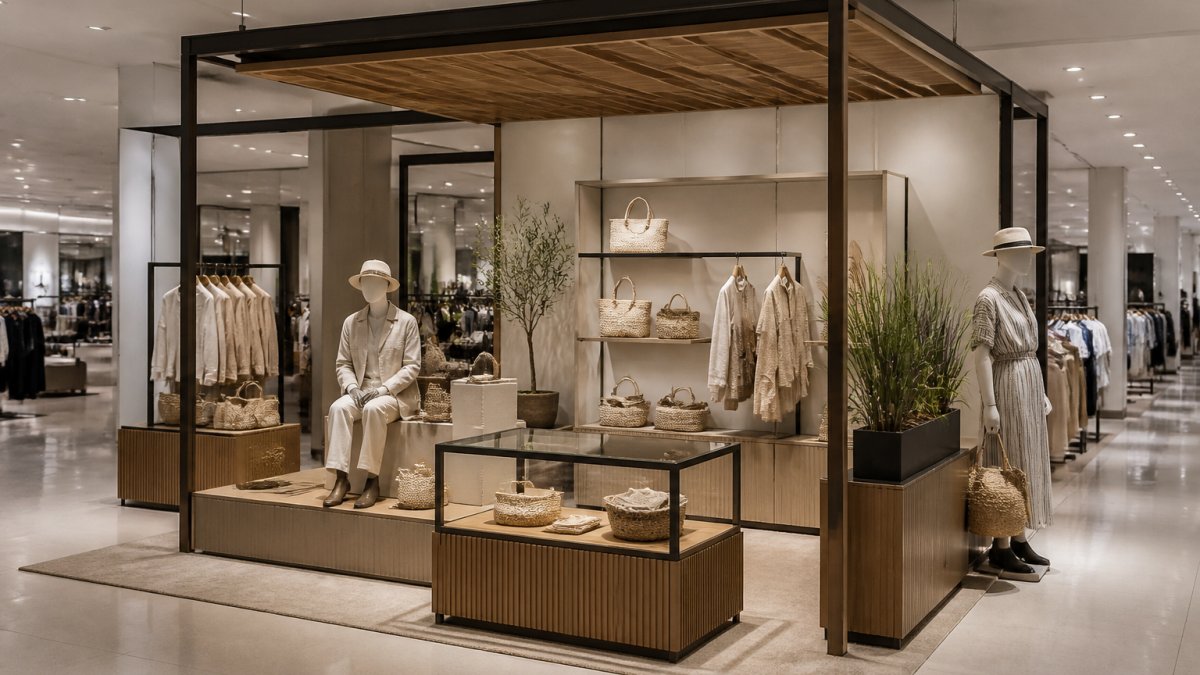
Millwork. Counters, reception desks, and finished cabinetry are built like furniture, joined, sanded, and finished. Millwork is where a booth feels premium, and where weight and cost accumulate.
Aluminum extrusion frames. The structural skeleton for most modular booths: light, strong, reusable, and it accepts tension fabric graphics directly.
Tension fabric graphics. Printed fabric stretched over a frame. Ships flat, installs fast, and can be re-skinned as your brand evolves.
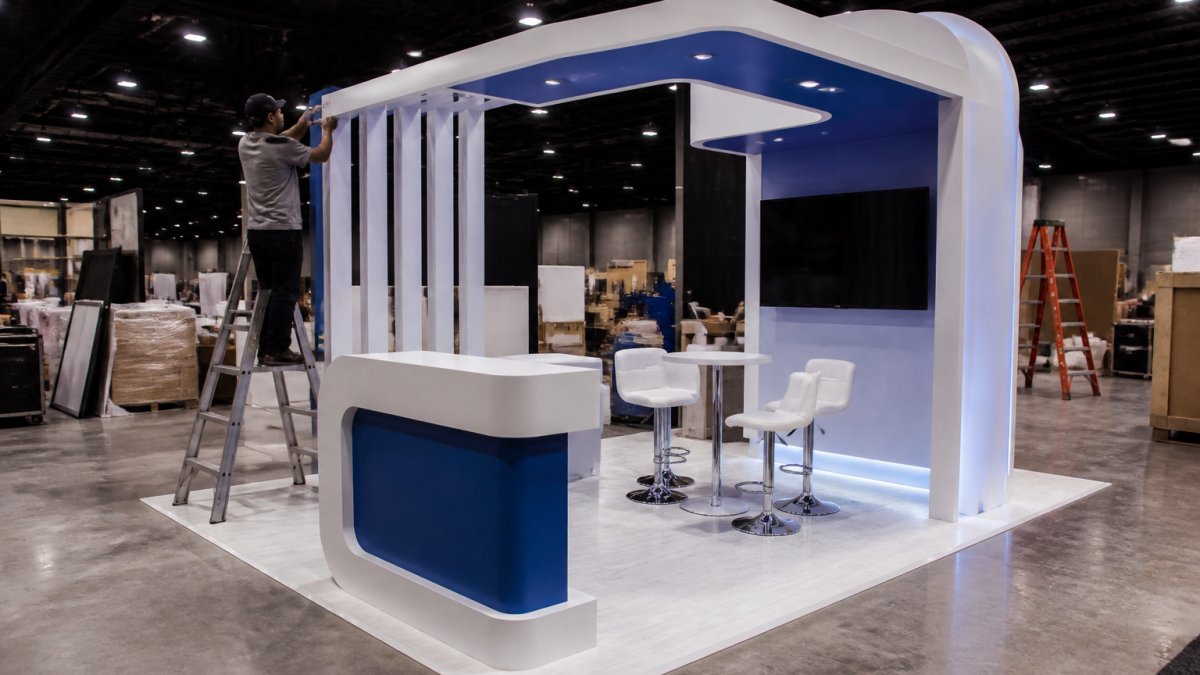
Lighting and AV. Engineered into the frame, not added later. Backlit graphics, accent lighting, and screens need power and mounting planned at the design stage.
Crating. Every booth ships in labeled crates with an install guide, which makes it installable by a crew that has never seen it before.
Traffic Flow Psychology and Floor Space Optimization
Attendees read a booth in about three seconds from the aisle. Open sight lines and a clear entry point pull people in; closed walls and a reception counter across the front push them past. Place your most magnetic element, a product demo, screen, or interactive kiosk, where it's visible from the aisle. Leave an obvious path in, never block the entry with furniture, keep the front third open, and put seating deeper in so conversations happen away from the aisle.
Lighting, Graphics, and Visual Impact That Reads From the Aisle
Lighting design is what makes a booth readable from 40 feet away. Backlit displays, accent lighting on product, and contrast between booth and hall floor matter more than the color palette. Fabric tension graphics give you large, seamless images that ship flat and install fast. Layer both, and your booth stops being a wall and starts being a destination.
When a Custom Trade Show Booth Beats a Rental
A custom trade show booth wins when you're exhibiting at multiple shows, when your brand needs a distinctive presence, or when a rental kit can't carry your product or message. Rentals win for one-off shows and test markets. The decision comes down to three variables: how many shows you'll attend, how much your footprint will change, and how much of your message depends on custom structure.
The Break-Even Math on Build vs. Rent
Pro Tip If you plan to exhibit at multiple shows in a year, the math can favor building. A custom booth can become a reusable asset, and each subsequent show costs you freight and install instead of a fresh rental fee.
A common pattern among multi-show exhibitors: rent the first show to test the market, then build once the calendar and footprint are stable. Building before you know your footprint is how companies end up with a custom booth that fits none of their shows.
Footprint Math: 10x10, 10x20, 20x20, and Island
Footprint drives everything, structure, graphics, lighting, labor, and freight. The most common configurations and what each can carry:
Footprint | Typical Use | What It Can Carry |
10x10 inline | First show, small brand | Backwall, counter, one screen, one product plinth |
10x20 inline | Growing program | Two-sided graphics, demo station, small meeting area |
20x20 island | Established exhibitor | Open sight lines on all four sides, product zone, meeting room |
20x30+ island | Flagship presence | Multiple zones, hanging sign, hospitality, demo theater |
What Actually Drives Custom Booth Cost
Custom booth cost is driven less by square footage than by four things: structure complexity, materials, graphics, and engineering for shipping and install.
Structure. A simple aluminum extrusion frame with tension fabric is faster and cheaper to build than a multi-level or curved millwork structure. Every curve, cantilever, and second story adds engineering, weight, and labor.
Materials. Laminate and painted MDF are common and cost-effective. Real wood veneer, metal, and acrylic raise both material and finishing cost. Choose materials for how they'll survive crating and repeated installs, not just how they look on day one.
Graphics. Large-format tension fabric graphics ship flat and install fast. Backlit graphics and rigid substrates cost more and add weight. Design so graphics can be re-skinned without rebuilding the frame.
Engineering for logistics. Crating, labeling, and modular assembly reduce freight, drayage, and I&D at every show. This is where the real long-term savings live.
Interactive Kiosks, Engagement Tactics, and Lead Capture
Interactive kiosks, product demos, and photo moments give attendees a reason to stop rather than walk. But engagement without capture is a missed opportunity. Build lead capture into the interaction itself, not as an afterthought at the counter.
How to Choose a Trade Show Exhibit Company
Choose a trade show exhibit company that owns its fabrication, understands logistics, and can show you how a design actually gets built. The right partner asks what you're trying to accomplish before asking what you want built.
Ask these questions before you sign:
Do you fabricate in-house, or outsource?
Who handles freight, drayage, and installation?
Can you show me how a past design shipped and assembled?
What happens if a piece doesn't fit on site?
How do you design for reuse and storage?
Installation and Dismantle: Cutting Drayage and Labor Costs by Design
Installation and dismantle costs are decided at the design stage, not on the show floor. Every decision that adds labor, specialty equipment, or extra crates adds cost at every show.
Key Takeaway The cheapest booth to install is the one designed to install itself with minimal labor. Freight, drayage, and I&D are recurring costs. Design against them once and you save at every show.
Post-Show Lead Conversion: Where Exhibit ROI Actually Gets Made
Exhibit ROI is made after the show, not on the floor. A booth that generates hundreds of badge scans and no follow-up is a sunk cost. Build the follow-up before the show: decide who owns each lead, how fast they're contacted, and what happens next.
A practical framework:
Hot (asked for a quote or demo): sales contact within 24 hours
Warm (engaged, no specific ask): personalized email within 48 hours
Cold (scanned, brief interaction): nurture sequence with relevant content
Frequently Asked Questions
How do you design a trade show booth for maximum engagement?
Start with traffic flow, not aesthetics. Open sightlines from at least two aisles, place a demo or interactive kiosk 6 to 8 feet inside the booth footprint so visitors step in rather than hover at the edge, and keep one staffer per 50 square feet of floor space. Design a clear path from attraction to conversation to lead capture. Booths that win on engagement treat the aisle-facing edge as a stage, not a wall.
What are the benefits of modular trade show exhibit design?
Modular systems cut long-term cost and logistics risk. You can reconfigure one kit into a 10x20 inline booth, a 20x20 island, or a pop-up display without new fabrication. Panels ship in standardized crates, which lowers freight weight and drayage bills, and damaged pieces swap out individually instead of forcing a rebuild. Reuse across multiple shows per year is where the savings compound.
How can exhibit design reduce drayage and installation costs?
Design decisions drive most material handling expense. Fewer, lighter crates reduce drayage, which is billed by weight and cube. Specify aluminum over steel, use tension fabric instead of heavy rigid panels, and design for tool-light assembly so two installers can build the booth instead of a crew of six. Label every crate and every part, and ship with a printed install guide. Breakthrough Productions engineers these details into the drawings before fabrication starts.
What should be included in a trade show exhibit design brief?
A usable brief covers show name and dates, booth size and floor plan, target audience, three to five measurable objectives, brand standards, required demo or product space, meeting or storage needs, budget range, and any venue rules that affect height, rigging, or hanging signs. Include your existing renderings or references. The clearer the brief, the fewer revision cycles before fabrication, which protects your deadline.
How early should you start the design process for a custom exhibit?
For a new custom trade show booth, start 4 to 6 months before the show. That allows 3 to 6 weeks for design and revisions, 4 to 8 weeks for fabrication, plus shipping and install scheduling. Reconfigurations of an existing modular exhibit can move faster, often 8 to 10 weeks. If your show is inside 8 weeks, talk to your builder before finalizing the concept so the design stays buildable.
How do you measure trade show exhibit ROI?
Set the metric before the show. Track qualified leads, cost per qualified lead, meetings booked on-site, pipeline value created within 90 days, and content captured for post-show marketing. Compare total program cost, including booth, freight, drayage, travel, and staff time, against pipeline. A booth that generates 200 badge scans but zero qualified conversations is more expensive than a smaller exhibit that produces 40 real opportunities.
LET'S START SOMETHING AMAZING

Comments