
How to Design Effective Brand Activation Experiences
Table of Contents
Start With Business Goals, Not Creative Ideas
How to Define Your Target Audience and Brand Touchpoints
Turn Each Touchpoint Into a Spec
The Compliance Layer Nobody Plans For
Design for the Audience You Actually Have
Choosing the Right Type of Brand Activation for Your Goals
The Format Decision Most Guides Skip: One-Off vs. Reusable
Sustainability: The Format Choice That Also Cuts Cost
Experiential Marketing Strategies That Drive Consumer Engagement
Brand Activation Fabrication Costs: What Actually Drives the Budget
Experiential Marketing Production Timeline: From Concept to Installation
How to Measure Brand Activation Success Beyond Impressions
Best Practices for Pop-Up Retail Design That Converts
Post-Activation Retention: What Happens After the Doors Close
Frequently Asked Questions
Last Updated: September 15, 2026
Start With Business Goals, Not Creative Ideas
Most brand activation projects begin with a mood board and end with a spreadsheet nobody wants to open. The order is backwards.
Brand activation turns a marketing objective into a live, physical experience that changes how people feel about a brand and what they do next. The creative idea is the vehicle; the business goal is the destination.
Before anyone sketches a booth or books a venue, answer three questions:
What business result must this activation produce?
How will we know it worked?
What happens to the people we meet after the event ends?
A team that answers those questions first will out-perform a team with a bigger budget and no thesis.
How to Define Your Target Audience and Brand Touchpoints
Audience definition is where most activation plans quietly fail. "Everyone at the show" is not an audience. A useful definition is narrow enough to make physical decisions, aisle width, staff count, whether you build a demo counter or a lounge.
Get specific enough to make those decisions:
Who is physically present? Buyers, distributors, press, end consumers, or a mix? Name the three job titles you most want to meet.
What do they already believe about you? Aware, indifferent, or actively skeptical? A skeptical audience needs proof, not a slogan.
What single action do you want from them? A demo, a sample, a scheduled meeting, a follow? One action, not five.
Which brand touchpoints matter? The approach, the first interaction, the photo moment, the handoff, the follow-up email.
Map those touchpoints to physical moments in the space, then decide what each one must accomplish. Nielsen's consumer trust research has long shown that people weigh personal experience and peer recommendation more heavily than advertising, which is why a well-mapped touchpoint beats a bigger sign.
Turn Each Touchpoint Into a Spec
A touchpoint isn't a feeling. It's a station with a job, a footprint, a staff count, and a capture method.
Touchpoint | Job To Be Done | Physical Requirement | Staff | Capture Method |
Approach | Stop the right person | Sightline, lighting, motion | 1 greeter | Badge scan |
First interaction | Qualify in under 30 seconds | Counter height, clear signage | 1-2 | Lead form |
Demo | Prove the product works | Power, water, ventilation, clearance | 1 expert | Timed sign-in |
Photo moment | Earn shareable content | Backdrop, key light, branded frame | 1 | Hashtag or QR |
Handoff | Book the next step | Quiet corner, seating, tablet | 1 closer | CRM entry |
If a touchpoint can't fill in all five columns, it isn't ready to be built. This is the step most teams skip, and why so many activations have a photo moment nobody uses and a demo station with no power run to it.
Pro Tip Walk your own floor plan as the target buyer would, in order, before you approve it. Most teams discover their best interaction is buried in a corner and their worst bottleneck sits directly at the entrance.
The Compliance Layer Nobody Plans For
Every touchpoint that captures something, a badge scan, a photo, an email, a sample redemption, creates a legal obligation. Most activation guides skip this part, and it produces the ugliest surprises.
Settle these before design locks:
Consent and data privacy. If you're collecting personal information on-site, your capture flow needs a clear consent step, a stated purpose, and a retention plan. State-level privacy laws now apply to event data the same way they apply to web data.
Photography and likeness. If you're shooting attendees for social content, you need signage and, in some cases, a signed release. A photo moment without a posted notice is a liability, not an asset.
Sampling and product rules. Alcohol, food, cosmetics, and anything regulated carries its own service, age-verification, and handling requirements. Venue and local rules vary, and they change the build.
Venue and fire regulations. Booth height, aisle width, flame-retardant materials, and rigging approvals are set by the venue and the authority having jurisdiction, not by your design team. Confirm them before fabrication, not after.
Permits and insurance. Temporary structures, tents, generators, and amplified sound often require permits and a certificate of insurance naming the venue.
None of this is glamorous. All of it is cheaper to plan than to fix. A capture flow that violates a privacy rule can invalidate the leads you spent the whole activation collecting, and a build that ignores a fire code gets stopped at the loading dock.
Design for the Audience You Actually Have
Match the touchpoint to the audience's energy, not your ideal. A trade show floor at 2 p.m. on day three is a tired audience; a fan festival at 7 p.m. is a loud one. The same demo station that works in a calm hospitality suite gets ignored on a noisy show floor unless it's built to interrupt.
That's the real output of audience definition: not a persona document, but physical and legal constraints the design must satisfy. Get those right and the creative work gets easier.
Choosing the Right Type of Brand Activation for Your Goals
The right activation format follows from your objective, not your budget.
Objective | Best-Fit Format | What It Demands |
Lead generation | Trade show booth, demo station | Staffed experts, capture flow, fast follow-up |
Product trial | Sampling, pop-up, kiosk | High traffic, clean logistics, restock plan |
Brand awareness | Sponsorship activation, fan zone | Scale, photo moments, social hooks |
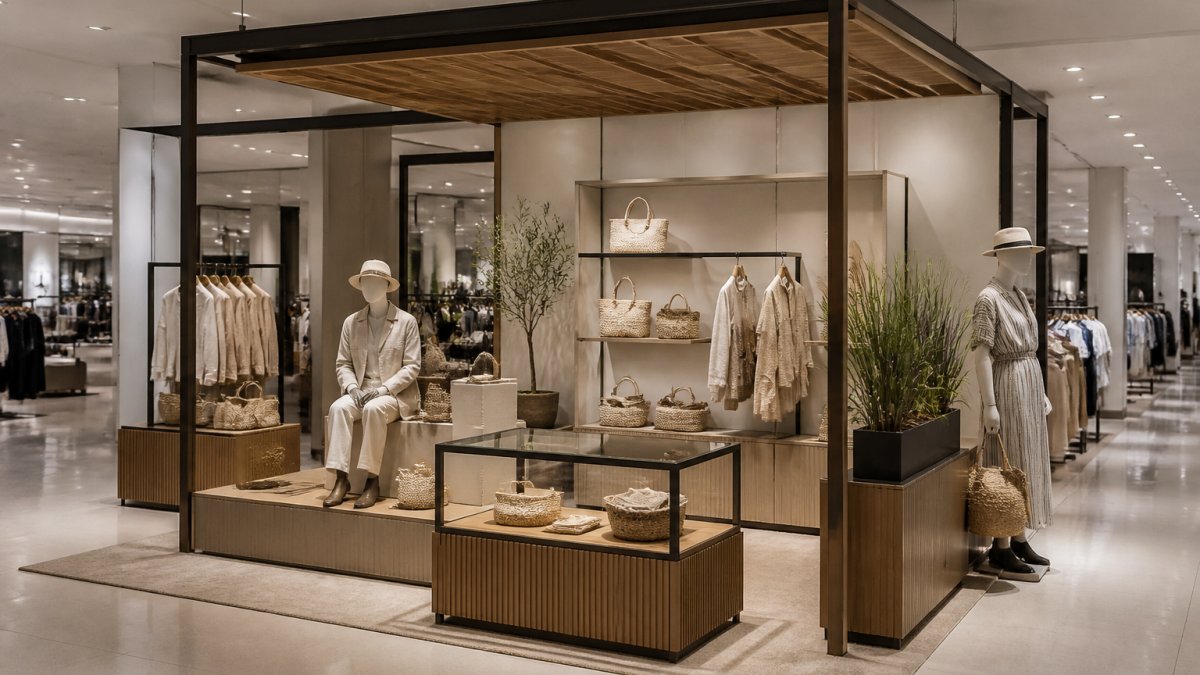
Retail sell-through | Shop-in-shop, temporary retail | Fixtures, merchandising, staff training |
Content capture | Photo moment, interactive build | Lighting, backdrop, shareable mechanics |
If you can't name the objective in one sentence, you're not ready to choose a format. Pick the goal first, then the build.
The Format Decision Most Guides Skip: One-Off vs. Reusable
The question that changes your budget more than any other: is this activation a single event or the first stop of a program?
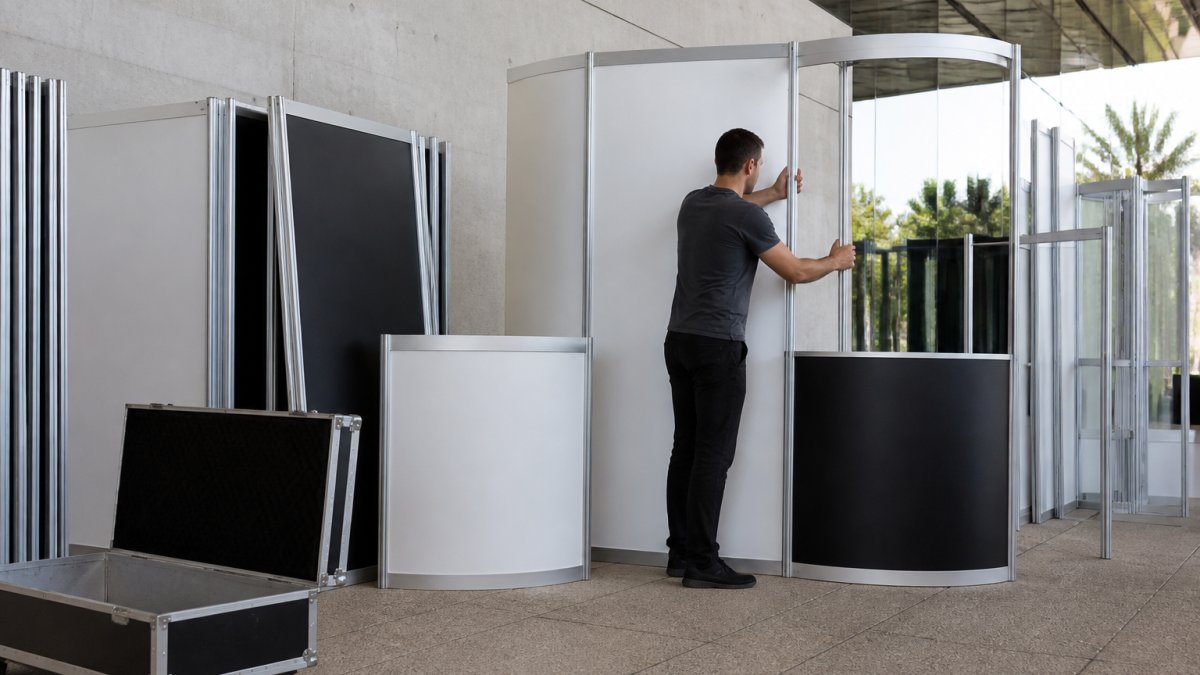
A one-off build can be optimized for a single venue, footprint, and install window. A multi-city program has to survive being crated, shipped, assembled, disassembled, and stored repeatedly without losing its finish or fit. Those are different engineering problems.
What changes when you design for reuse:
Modular over monolithic. A build that breaks into labeled, crated sections installs faster and survives freight better than one welded piece.
Durable finishes over delicate ones. Painted MDF and printed vinyl look great on day one and rough by city three.
Sustainability: The Format Choice That Also Cuts Cost
Key Takeaway Choose the format that matches your objective, then ask whether it's built to be used once or many times. That single question drives engineering, materials, freight, and cost more than any creative choice you'll make.
Experiential Marketing Strategies That Drive Consumer Engagement
The strategies that consistently work:
Brand Activation Fabrication Costs: What Actually Drives the Budget
The variables that move the number most:
Watch Out Designing without a logistics plan is the most expensive mistake in this category. A build that can't be crated efficiently or installed by a small crew within the venue's window will burn its savings on labor and overtime.
Experiential Marketing Production Timeline: From Concept to Installation
Here's how the phases typically break down:
How to Measure Brand Activation Success Beyond Impressions
Measure what the activation was built to produce.

Metric | What It Tells You | How to Capture It |
Qualified conversations | Whether the right people engaged | Staff logs, badge scans |
Lead capture rate | Pipeline potential | CRM entries, forms |
Demo completion | Depth of engagement | Sign-in, timed stations |
Content generated | Earned reach | Hashtag tracking, UGC |
Sample redemption | Trial conversion | Redemption codes |
Follow-up response rate | Whether the experience stuck | Email and call tracking |
Best Practices for Pop-Up Retail Design That Converts
What works in practice:
Key Takeaway Pop-up design is a conversion exercise disguised as a design exercise. If a shopper can't tell what you sell within five seconds of walking in, the layout needs work before the graphics do.
Post-Activation Retention: What Happens After the Doors Close
Build the follow-up into the plan from day one:
Pro Tip Design your follow-up sequence before you design the booth. Knowing what you'll ask people to do afterward changes what you capture on-site.
Frequently Asked Questions
What are the key elements of a successful brand activation?
A successful brand activation starts with clear campaign objectives tied to business outcomes, not just attendance numbers. You need a defined target audience, a physical design that invites interaction, and a production plan that accounts for fabrication, shipping, and installation. The activation should create an emotional connection that people want to share. Finally, you need measurement systems in place before the event opens, so you can track engagement, data collection, and conversion rate from day one.
How do you measure the ROI of a brand activation?
Measuring brand activation success requires tracking both hard and soft metrics. Hard metrics include leads captured, product sampling counts, social sharing volume, and sales attributed to the activation. Soft metrics include brand recall surveys, dwell time, and audience interaction rates. Set key performance indicators before the event, then compare results against your campaign objectives. For sponsorship activations, isolate the sponsored touchpoints so you can report separately to each stakeholder. Tie every metric back to a stage in the marketing funnel.
How long does it take to design and fabricate a custom brand activation?
A typical experiential marketing production timeline runs 8 to 16 weeks from approved concept to installation, depending on complexity. Simple pop-up retail environments may take 6 to 8 weeks. Custom fabrication with CNC millwork, integrated AV, and modular structures often needs 12 weeks or more. Add time for venue approvals, freight scheduling, and rehearsal. If your deadline is tight, bring your fabrication partner in early, even before the design is finalized, so they can flag buildability issues before they become expensive problems.
How do you ensure a brand activation design is feasible for installation?
Feasibility starts with involving your fabrication partner during concept development, not after. They will review venue regulations, load-in access, ceiling height, power availability, and drayage requirements. Design for modular crating and labeled assembly so pieces fit through doors and freight elevators. Build a installation schedule with contingency time. A partner who owns fabrication in-house can test-fit components before shipping, which prevents the on-site surprises that blow budgets and timelines.
LET'S START SOMETHING AMAZING

Comments